
Americans Expect a Future Shaped by AI, but Fear Other Threats More



Omnibites are bite-sized insights from the AmeriSpeak Omnibus, NORC’s fast, affordable way to tap into nationally representative public opinion.
September 2026
Views of humanity’s future reveal concerns about artificial intelligence, nuclear war, climate crisis, and global stability.
As discussions about artificial intelligence (AI) increasingly focus on its potential impact on humanity, Americans are thinking broadly about the future and the challenges that may lie ahead. Debates about advanced AI, geopolitical instability, climate change, and economic uncertainty have fueled questions about which future scenarios people see as plausible and which they view as most threatening.
Using data from the AmeriSpeak® Omnibus, we explore how Americans think about some of humanity’s biggest possibilities and risks. The findings reveal widespread expectations that AI will continue to advance, concerns about traditional global threats such as nuclear war and economic collapse, and notable political differences in how Americans envision the future.
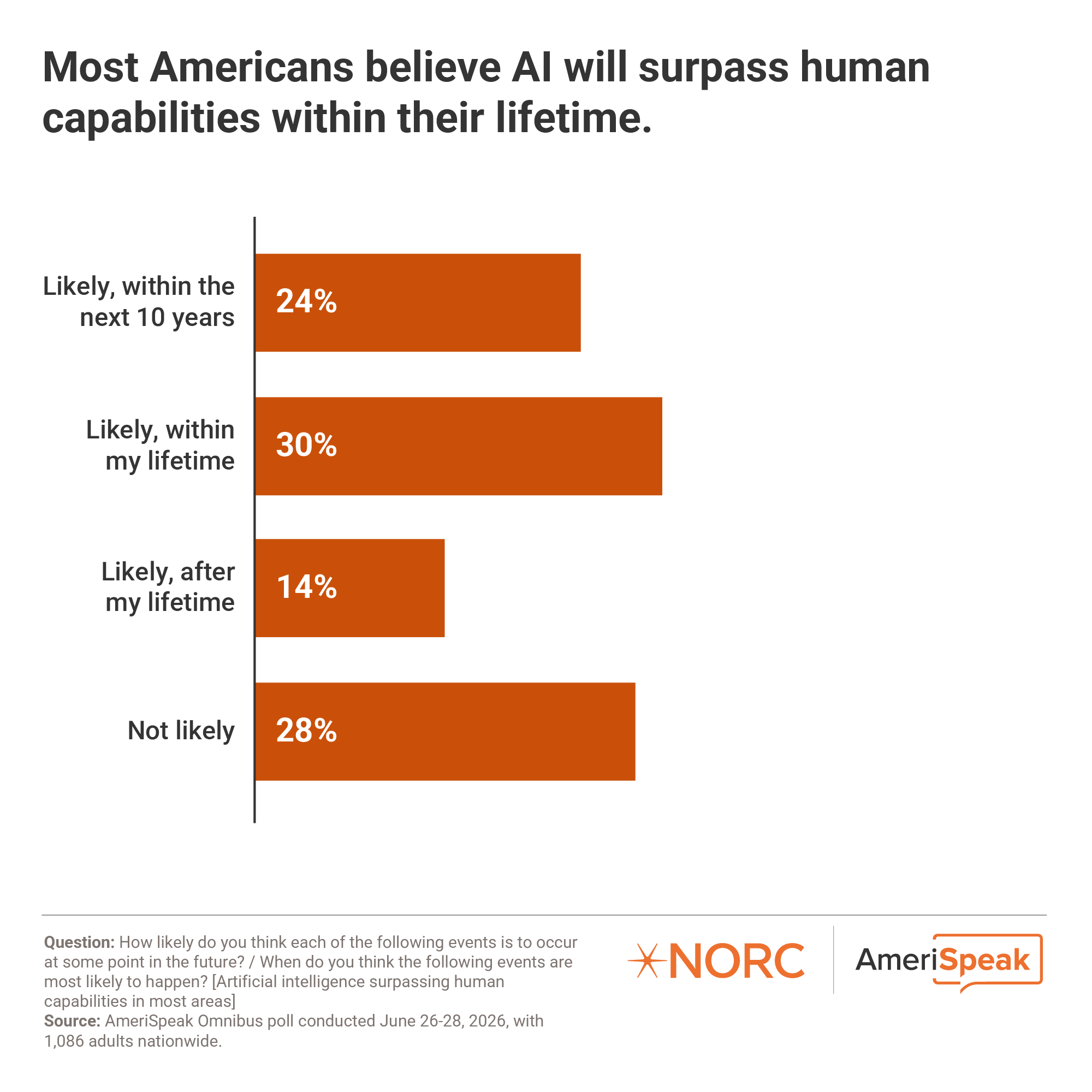
Despite growing concerns about AI’s potential risks to humanity and calls from some AI leaders to slow its development, most Americans believe AI capabilities will continue to advance.
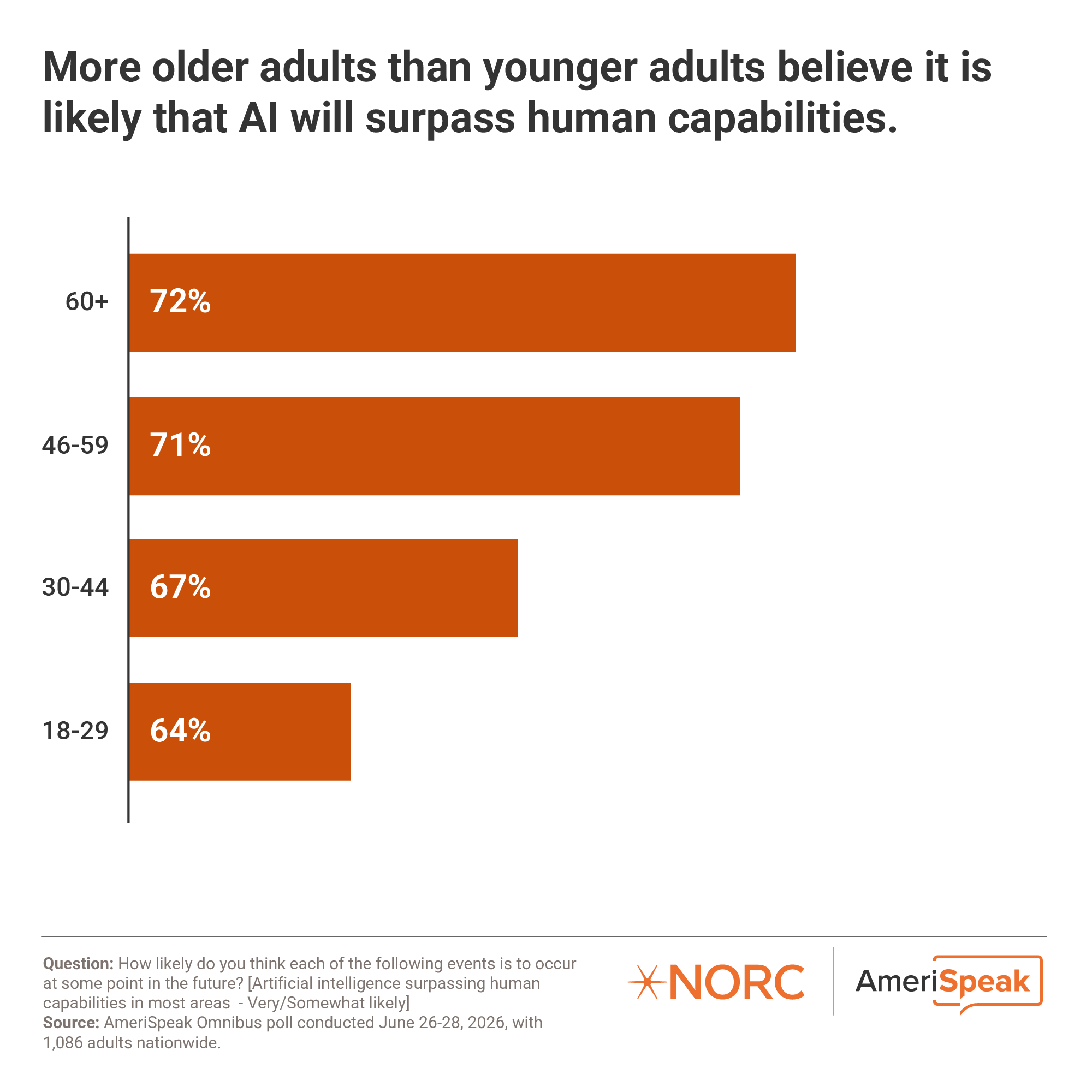
More than half of Americans believe AI will surpass human intelligence during their lifetime, including nearly one-quarter who think it will happen within the next 10 years. Older adults are especially likely to hold this view, with more than seven in 10 adults ages 45 and older expecting AI to surpass human capabilities.
For many Americans, AI has moved from the realm of science fiction to a reality they expect to witness firsthand.
Findings are drawn from our AmeriSpeak Omnibus survey, which offers a streamlined, cost-effective solution for obtaining high-quality, nationally representative data.
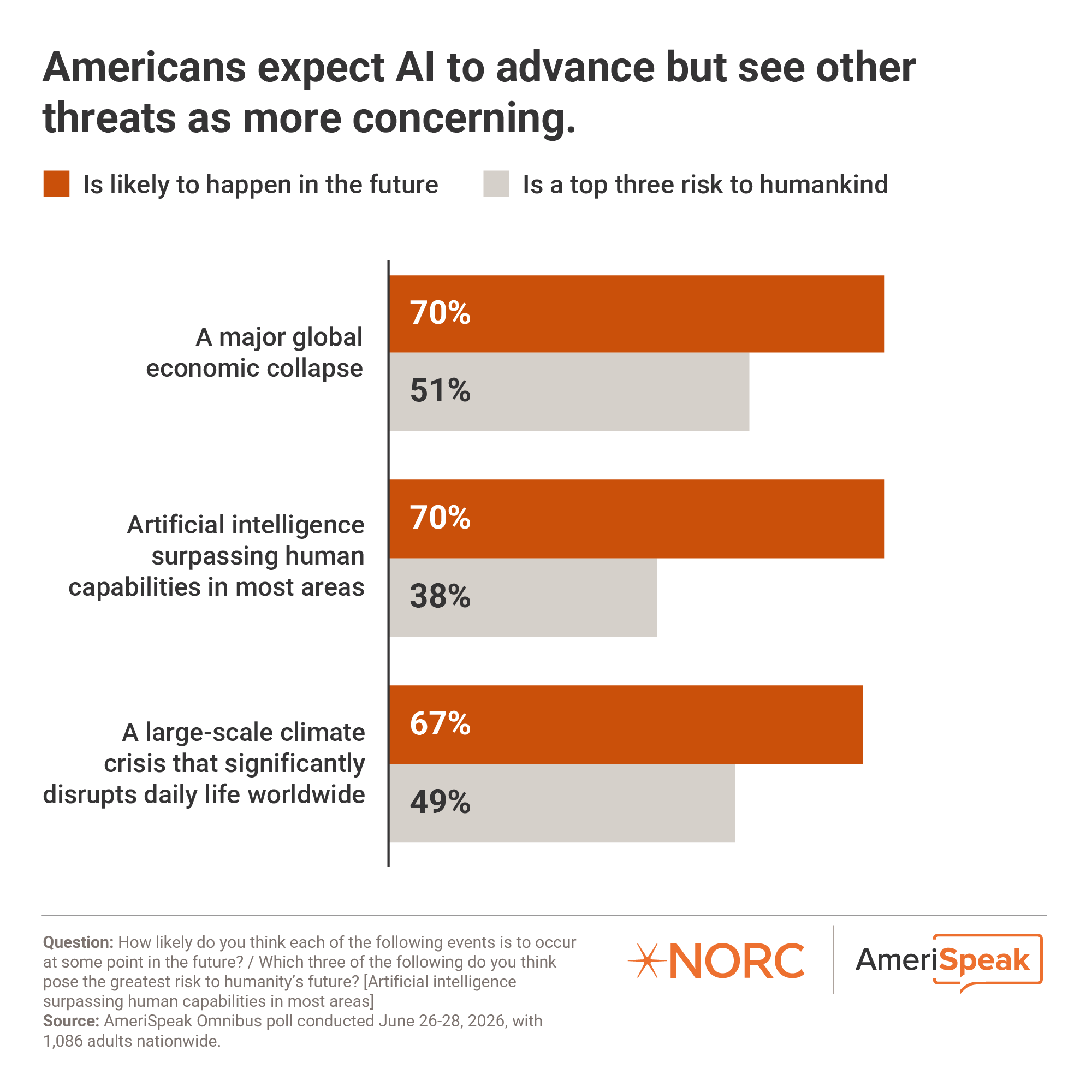
AI may dominate discussions about humanity’s future, but it isn’t the threat Americans fear most.
While 70 percent of Americans believe AI will surpass human capabilities in the future, only 38 percent rank it among the top threats to humankind. Economic collapse and climate crisis are viewed as greater risks, despite being similarly likely to occur.
The findings suggest Americans distinguish between developments they expect to happen and those they believe pose the greatest danger.
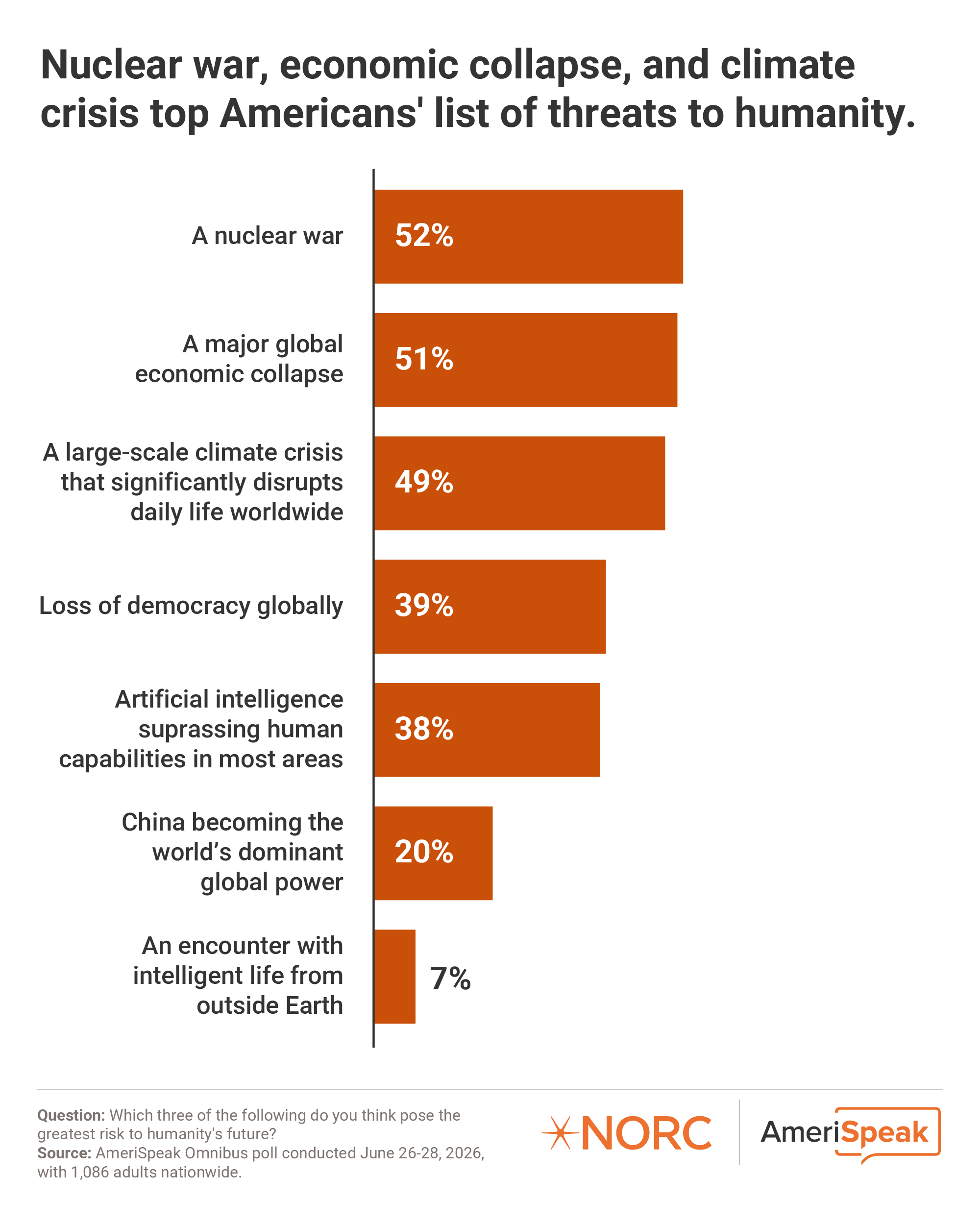
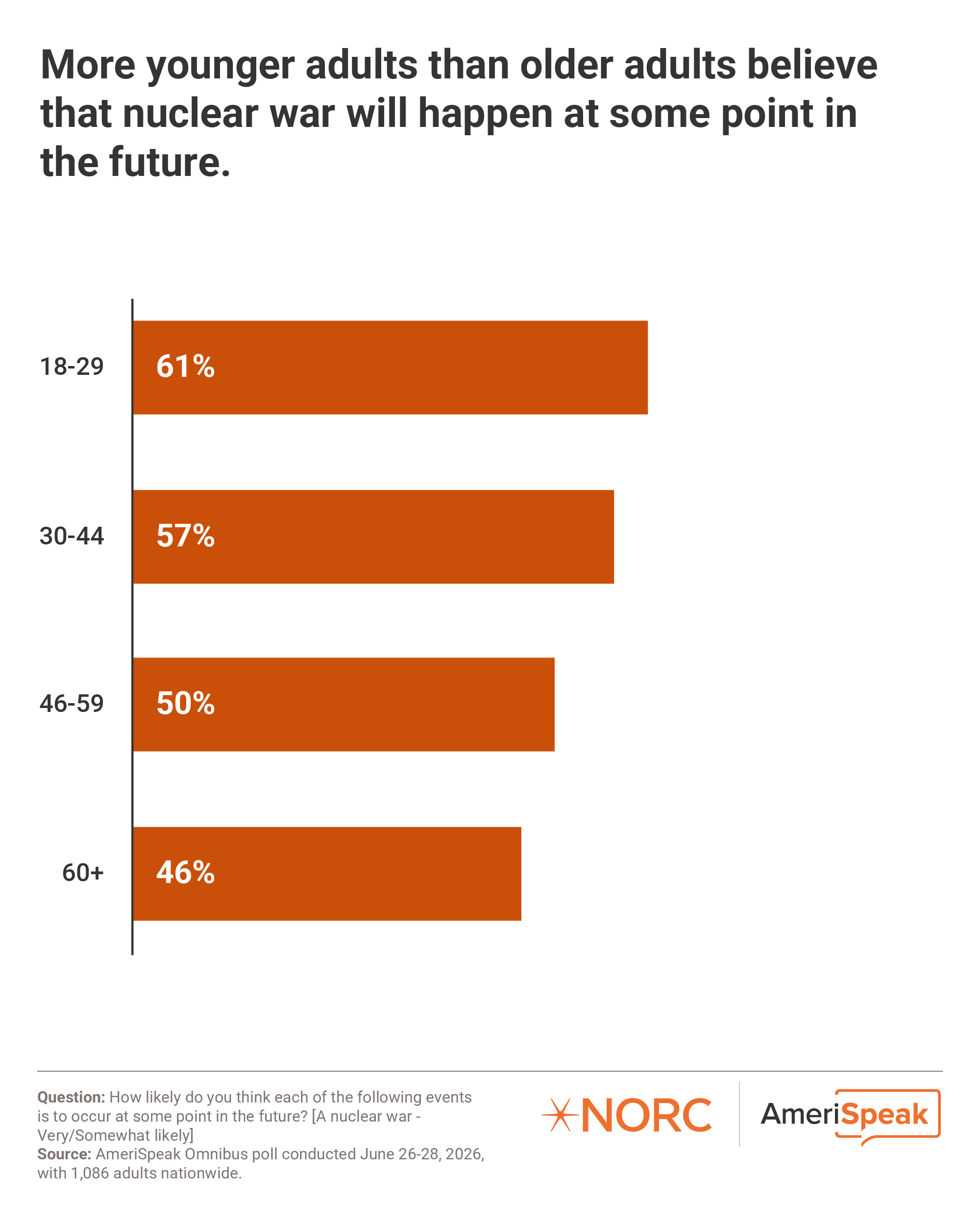
Nuclear war tops Americans’ list of threats to humanity, followed closely by economic collapse and climate crisis.
Younger adults are especially concerned about the possibility of nuclear war. Nearly two-thirds of adults ages 18-29 believe a nuclear war is likely to happen, compared to fewer than half of adults ages 60 and older.
The findings highlight a generational divide in how Americans view one of the world’s most consequential risks.
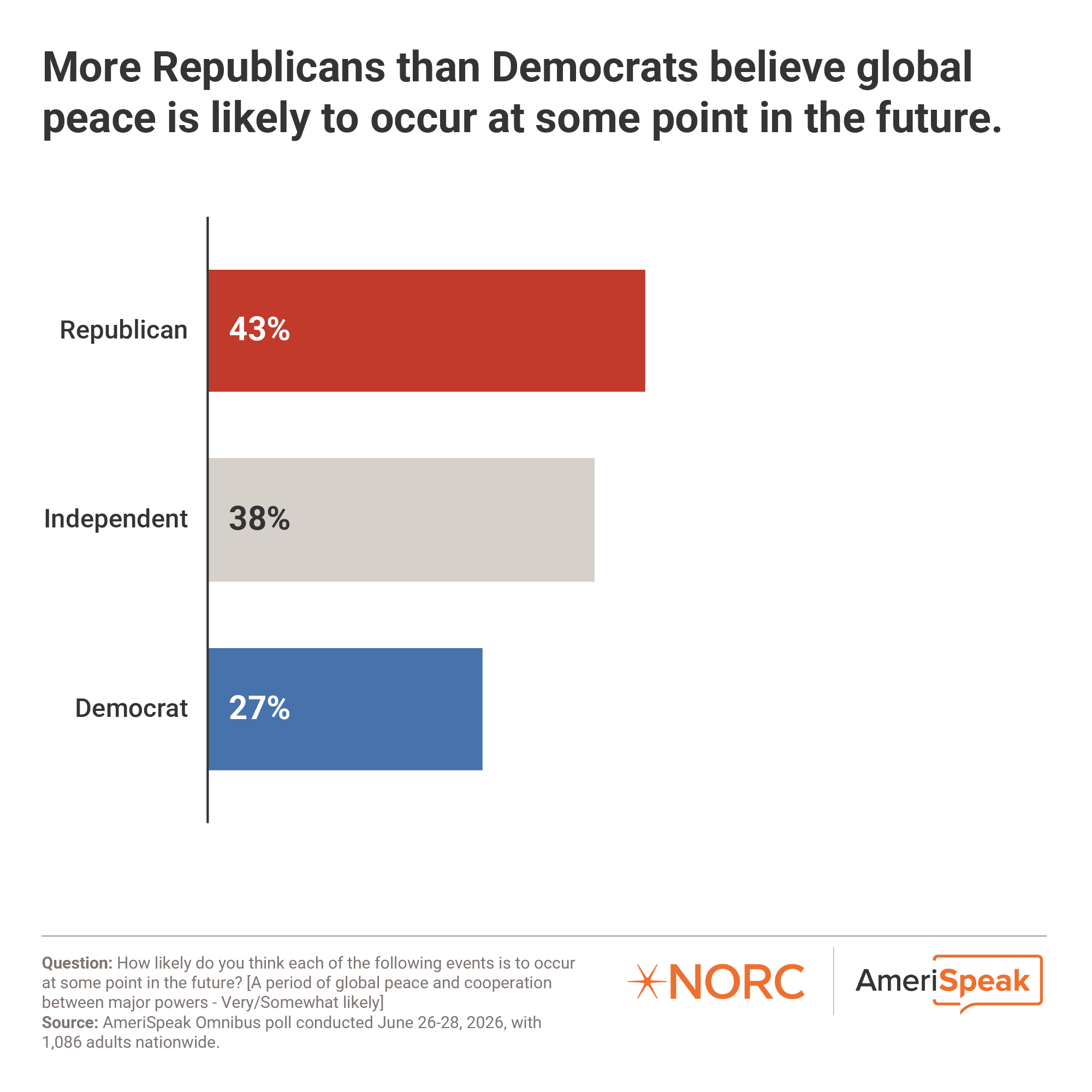
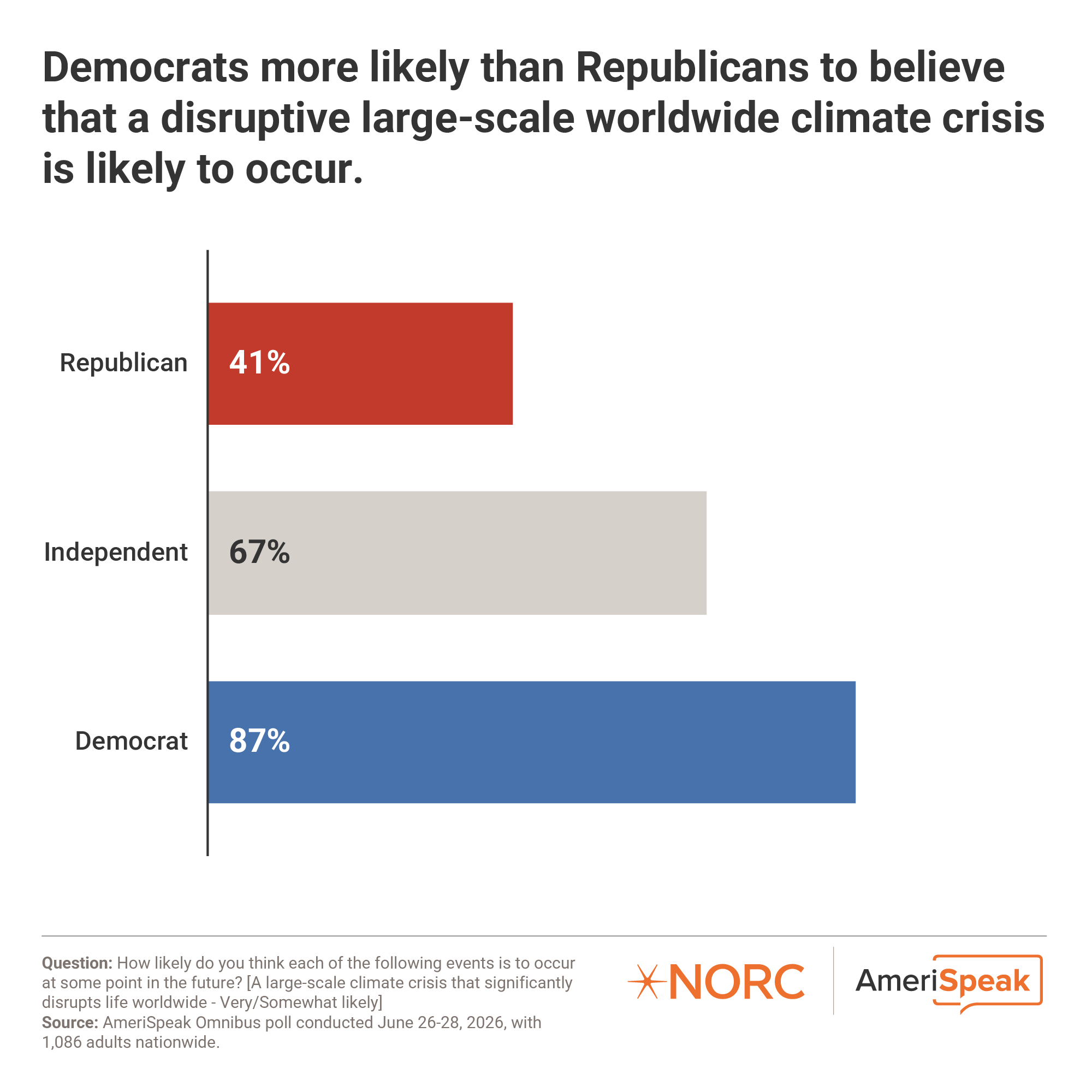
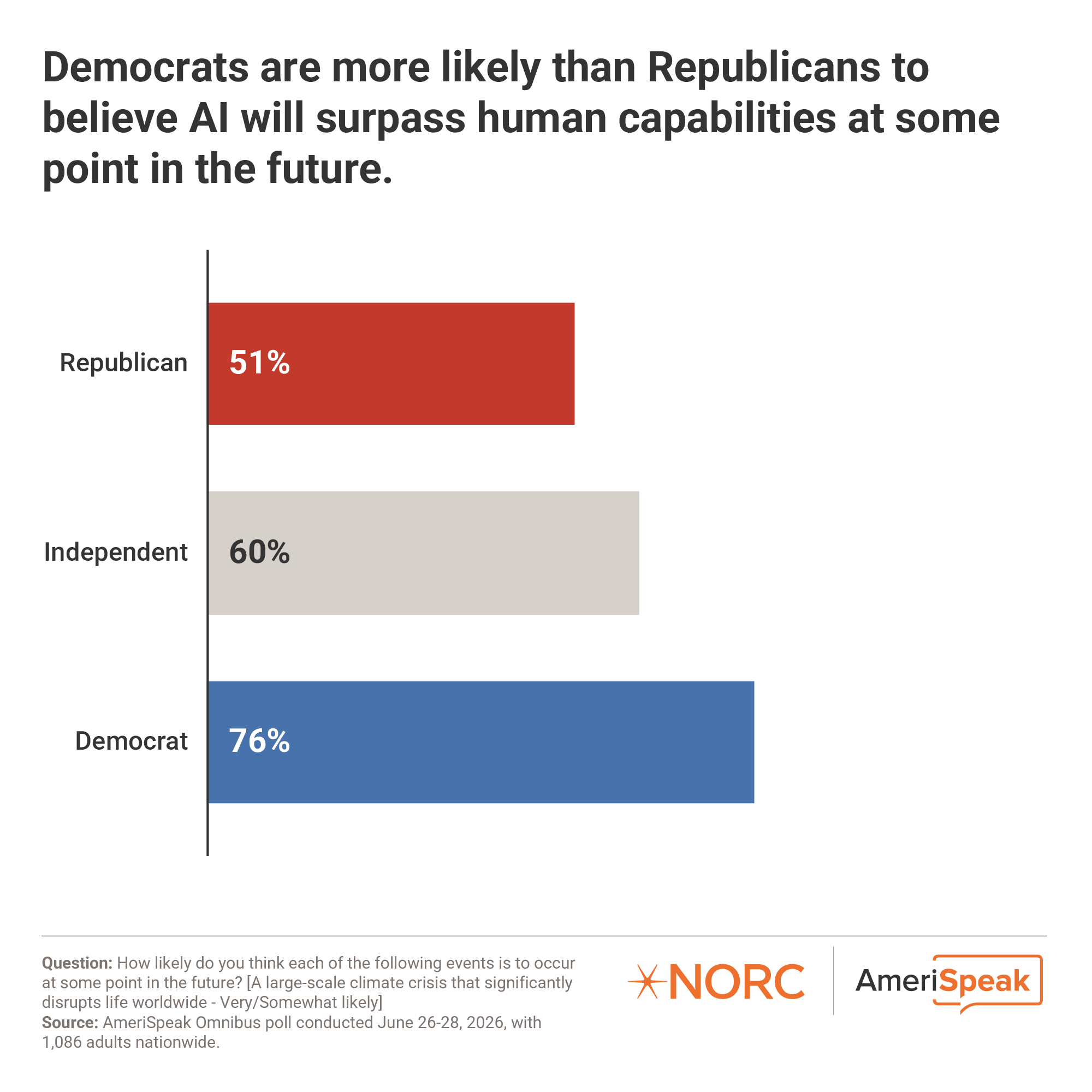
Americans across the political spectrum may be envisioning very different futures.
Republicans are more likely than Democrats to believe a period of global peace and cooperation among major powers is possible. Democrats, meanwhile, are substantially more likely to believe a large-scale climate crisis and AI surpassing human intelligence are likely future scenarios.
The findings suggest partisan differences extend beyond opinions about current events to expectations about what the future may hold. Across issues ranging from global peace to climate change and AI, Republicans and Democrats differ significantly in which scenarios they see as likely.
The Future Americans Envision
These findings suggest Americans distinguish between the future they expect and the future they fear. While many believe AI will continue advancing and surpass human capabilities, Americans are more likely to identify nuclear war, economic collapse, and climate crisis as humanity’s greatest threats.
The results also reveal that expectations about the future vary across generations and political affiliations. Younger adults express more concern about nuclear war, while Democrats and Republicans differ in how likely they believe scenarios such as global peace, climate crisis, and advanced AI may be. Ultimately, Americans may not agree on exactly what the future holds, but they share a strong interest in understanding the forces that could shape it.
Methodology
A poll of 1,086 American adults was conducted between June 26-28, 2026, using the AmeriSpeak® Omnibus, a bi-monthly multi-client survey using the AmeriSpeak panel, NORC’s probability-based panel that is designed to be representative of the U.S. household population. The margin of error is +/- 4.0 percentage points at the 95 percent confidence level, including the design effect. View the full methodology in the Transparency Report.
Findings are drawn from our AmeriSpeak Omnibus survey, which offers a streamlined, cost-effective solution for obtaining high-quality, nationally representative data. The Omnibus provides a nationally representative snapshot of U.S. adults, sourced directly from the AmeriSpeak panel. Households are selected randomly through NORC’s National Sample Frame, known for its industry-leading coverage. This frame encompasses over 97 percent of U.S. households, ensuring that all segments are well represented. AmeriSpeak goes the extra mile in recruitment, using a combination of U.S. mail notifications, NORC telephone interviewers, and in-person field staff.
Get in touch with our team and find out how our Omnibus—or any of our other survey options—can meet your research needs.
AmeriSpeak OmniBites
Bite-sized insights from the AmeriSpeak Omnibus. The Omnibus is a fast, affordable way to tap into nationally representative public opinion.
About AmeriSpeak
Funded and operated by NORC at the University of Chicago, AmeriSpeak® is a probability-based panel designed to be representative of the U.S. household population. Randomly selected U.S. households are sampled using area probability and address-based sampling, with a known, non-zero probability of selection from the NORC National Sample Frame. These sampled households are then contacted by U.S. mail, telephone, and field interviewers (face-to-face). The panel provides sample coverage of approximately 97 percent of the U.S. household population. Those excluded from the sample include people with P.O. Box only addresses, some addresses not listed in the USPS Delivery Sequence File, and some newly constructed dwellings. While most AmeriSpeak households participate in surveys by web, non-internet households can participate in AmeriSpeak surveys by telephone. Households without conventional internet access but having web access via smartphones are allowed to participate in AmeriSpeak surveys by web. AmeriSpeak panelists participate in NORC studies or studies conducted by NORC on behalf of governmental agencies, academic researchers, and media and commercial organizations.
For more information, email AmeriSpeak-BD@norc.org or visit norc.org/services-solutions/amerispeak.html.
About NORC at the University of Chicago
NORC at the University of Chicago conducts research and analysis that decision-makers trust. As a nonpartisan research organization and a pioneer in measuring and understanding the world, we have studied almost every aspect of the human experience and every major news event for more than eight decades. Today, we partner with government, corporate, and nonprofit clients around the world to provide the objectivity and expertise necessary to inform the critical decisions facing society.
Contact: For more information, please email press@norc.org or call (877) 832-0392.


